

A sauna that floats: why a sauna is the first wellness building an estate should add
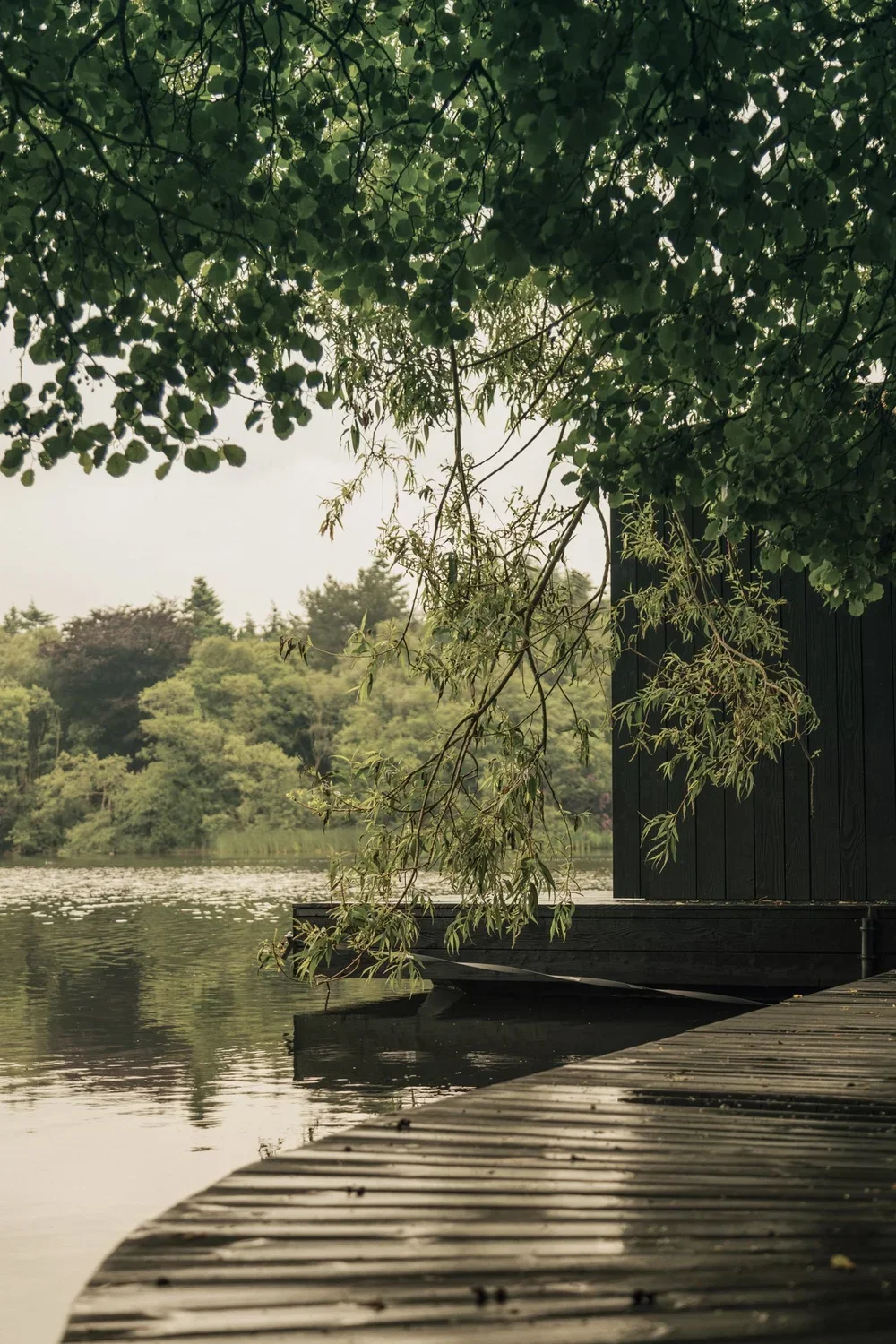
On a lake in Norfolk there is a charred timber sauna for nine, anchored off the shore and reached by a floating walkway. Guests walk out over the water, sit in the heat, and swim from the step. It was built for the Fritton Lake estate alongside twenty Koto cabins, and it is the building guests talk about most. Here is how it works, and why a sauna is usually the right first move for an estate or a hotel thinking about wellness.
In short
The Fritton Lake sauna floats on the lake, anchored and connected to the bank by a floating walkway. It seats up to nine.
A sauna is the smallest wellness building that changes a stay: it extends the season, lifts the nightly rate and gives guests a reason to book in January.
Koto saunas are built off site, delivered complete and set by crane, on land or on water. Delivery and installation of a standard sauna is typically about £2,750 plus VAT on top of the sauna.
Heaters come from Finland. A 9 kW electric heater costs a few pounds an hour to run; wood-fired is the alternative where there is no power.
Treat it as a ritual, not an add-on: the walk to it, the view from the bench, the water to cool off in. That is what guests pay for.
How a sauna floats
The sauna sits on a buoyant base, anchored to the lake bed so it holds its position through wind and changes in water level, and is reached by a floating walkway that rises and falls with it. The structure is the same charred timber and insulated timber frame as the cabins on the shore, so the collection reads as one family. Services are kept simple: power for the heater and lighting runs along the walkway, and there is nothing to drain.
Because it is built off site and craned onto the water complete, there is no construction on the lake and almost none on the bank. Where a site has water, that is usually the best place for the sauna, because the cold plunge is already there.

Why start with a sauna
It is small. A sauna for six to nine people is a single lift and a few days on site. It needs no planning argument on the scale of a spa building.
It changes the season. A sauna, a cold swim and a fire make a winter weekend sell, which is the half of the year most estates struggle with.
It lifts the rate. Guests pay for a ritual they cannot have at home, and they photograph it, which does the marketing.
It is a test. If the sauna is booked solid, the case for treatment rooms, a spa pavilion or a bathing garden is made with real numbers rather than a forecast.
Heat, timber and running costs
We work with Finnish heater makers chosen for quality and, for the wood-fired stoves, for the scent and colour of the heat. An electric heater of around 9 kW is the usual choice where there is power; it draws its rating per hour, so an hour of heat costs a few pounds at current tariffs. Wood-fired suits off-grid sites and gives the softer heat many guests prefer. Benches are in timbers chosen for low heat conduction, and the sauna is detailed with high-performance membranes so it heats quickly and holds the heat, which is where the running cost is saved.

What it looks like elsewhere
The same thinking runs through our wellness cabins beside a Highland loch, the spa pavilions we design for hotels, and the saunas we build for private gardens. The sauna at Fritton is the simplest version of all of them: one room, one view, water on every side.

Questions we are asked
Can a sauna float on any lake? Most still water, yes, subject to depth for the anchors and access for the crane. Rivers and tidal water need a different approach.
Does it need planning permission? Often it is treated as a structure ancillary to an existing use, but every site is different and we check at the first visit.
How many people should it seat? Six to nine for a hotel or estate; it keeps the atmosphere and lets a group go in together.
How long does it take? Saunas are made to order in the workshop; lead time depends on the schedule, with a 30 per cent deposit to secure a slot. Delivery and installation take days.
Where do we start? Tell us about the site and the water. See spa and wellness.