Shou sugi ban: the charred timber on most Koto buildings
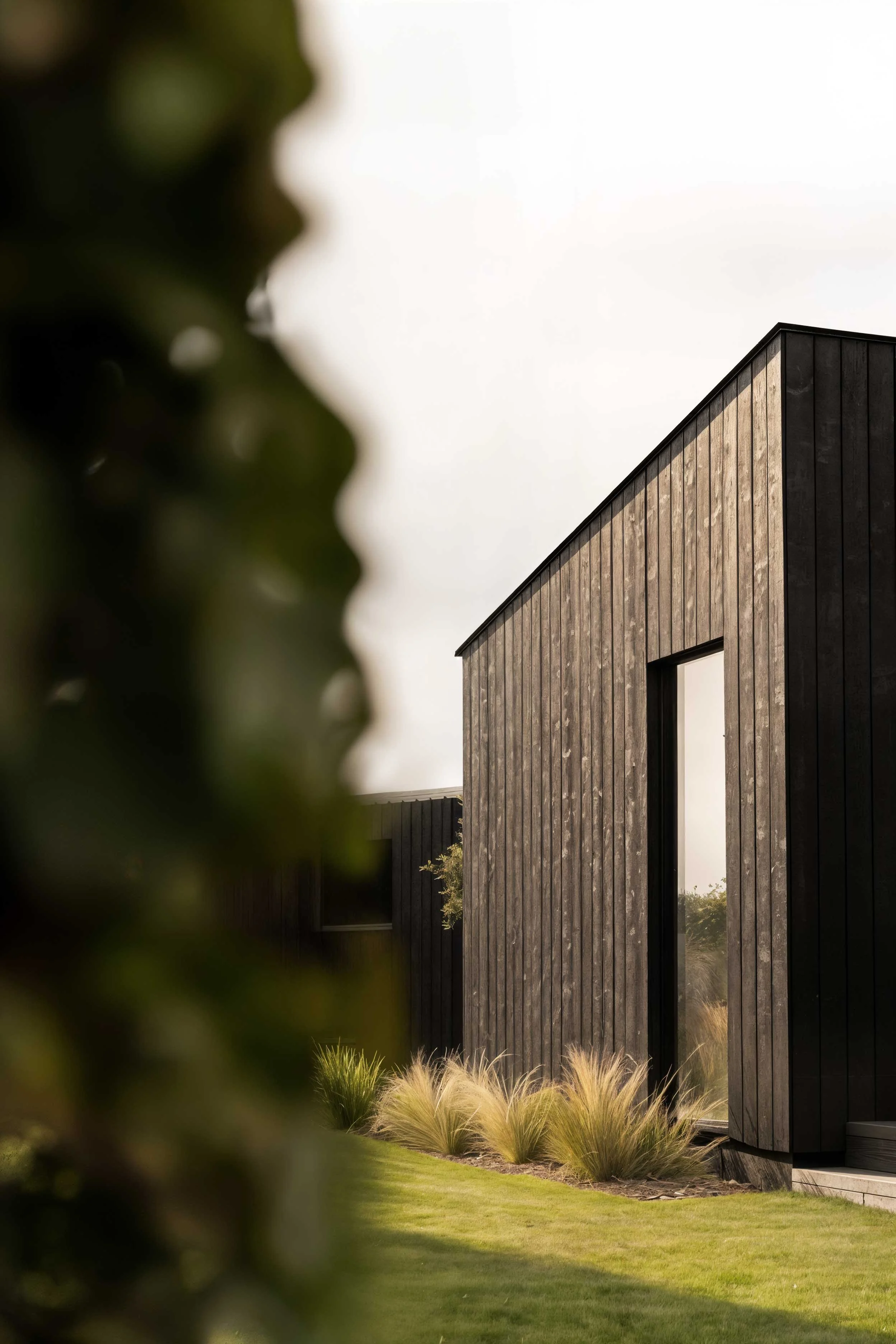
Almost every building Koto has made is black. The hotel cabins at The Point in Polzeath, the family home at Southwater that Grand Designs filmed, Uist House on the Hebridean shore, the cabins around the lake at Fritton, the saunas: all of them are clad in timber that has been charred, brushed and oiled. The technique is Japanese and centuries old. This is what it is, why we use it, and what it is like to live with.
In short
Shou sugi ban (yakisugi in Japan) is timber cladding whose surface has been burnt to a layer of carbon, then brushed and usually oiled.
The char protects the wood underneath from weather, insects and rot, so the boards last for decades with very little upkeep.
Koto uses British larch, charred and finished by the factories that build our cabins and homes, with fire-rated options where a project needs them.
It costs more than painted softwood and less than most of the alternatives that last as long. On a Koto building it is a small part of the whole.
It does not stay matt black forever. It softens to a deep charcoal and the grain comes through. We think that is the point.
What shou sugi ban is
The name is a Western rendering of the Japanese yakisugi, roughly "burnt cedar". In Japan the boards were traditionally Japanese cedar (sugi), bound in a triangular chimney and set alight so the draught charred the inside faces evenly. The burnt boards were cooled with water, brushed to remove loose soot, and sometimes oiled. Temples, farmhouses and townhouses were clad this way for hundreds of years, which is how we know how long it lasts.
The modern method is the same idea with a controlled flame. Each board is charred to a set depth, cooled, brushed to the finish wanted (from a heavy alligator-skin char to a smooth, almost silver-grey surface) and then oiled to fix the colour and slow the weathering.
Why it works
Charring changes the surface of the wood in three ways. It removes the sugars and cellulose that fungi and insects feed on. It closes the surface against water, so the board moves less with the seasons and holds its shape. And it leaves a layer of carbon that is itself very stable, so the weather wears at something that is already past burning. The result is a cladding that needs no paint, no stain and no regular treatment.
It is also better in a fire than untreated timber, because the surface has already gone through the stage where wood catches. That is not the same as being fire-rated: where a building needs a rated cladding, we specify a tested charred board for it, and say so in the specification.
Why Koto uses it
We design buildings that have to sit in landscapes without shouting, often on estates, coasts and in woodland where the planning case rests on the building being quiet. Black timber does that better than anything else we have found. It recedes into hedgerows and trees, it reads as shadow rather than object, and it looks the same from the first winter to the twentieth.
The practical case matters as much. Our cabins and homes are built in factories and craned onto site, often somewhere remote. A cladding that is finished before it leaves the factory, and that nobody then has to paint on a ladder every few years, is the right cladding for a building like that. For a hotel or an estate running twenty cabins, the maintenance a cladding does not need is money every year.
The buildings
Southwater, West Sussex. A single-storey family home built as five modules, clad in charred UK larch, set among hedgerows and fields. It was filmed for Grand Designs, and the black timber is what most people remember.

Uist House, North Uist. A four-bedroom home on the Atlantic edge of the Outer Hebrides, built off site and shipped to the island. Burnt larch outside, calm timber inside. The weather there is the hardest test we have given the material.
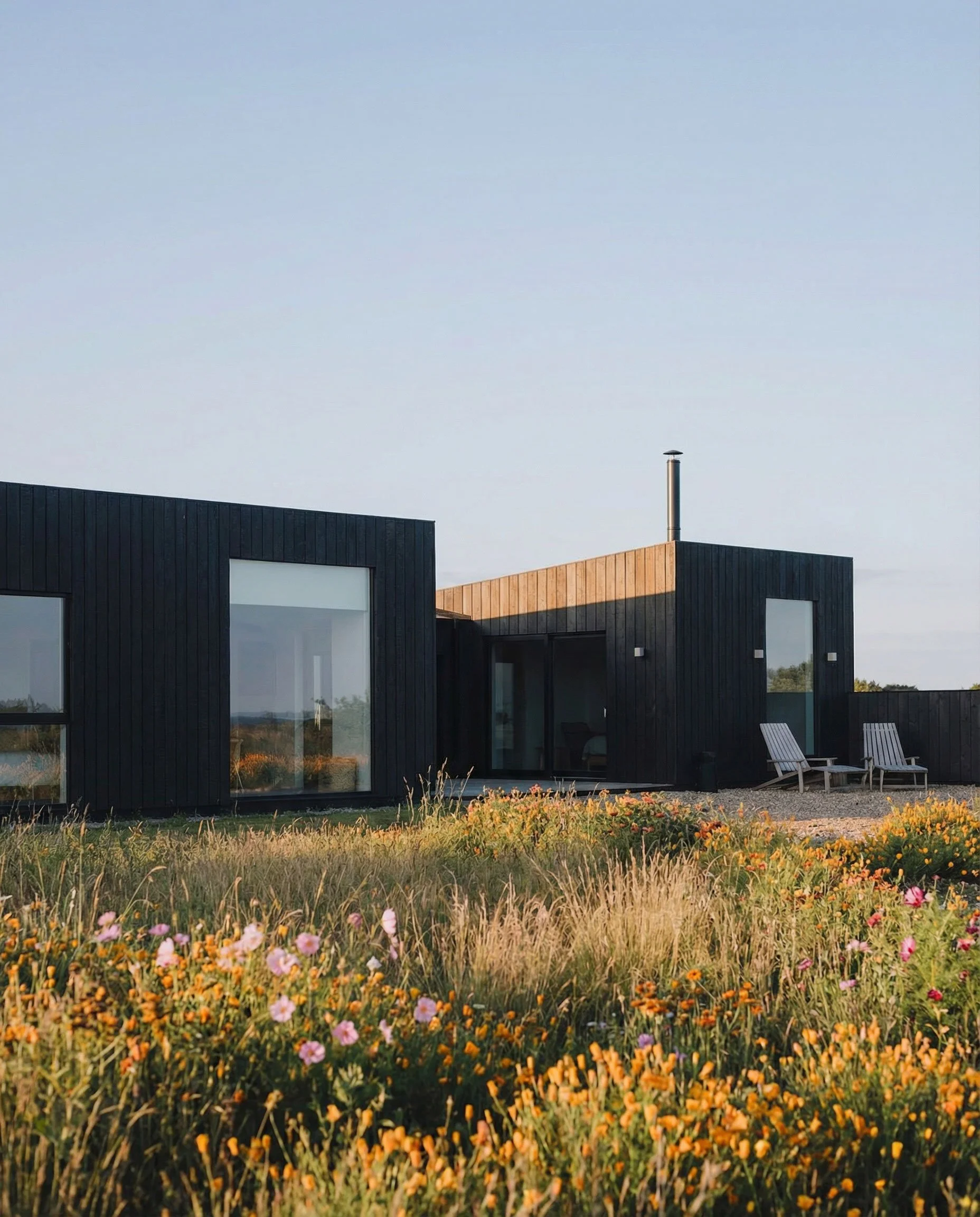
The Point, Polzeath. Coastal hotel cabins on the north Cornwall cliffs, delivered under the Caravan Act. Black charred timber against the gorse and the sea.
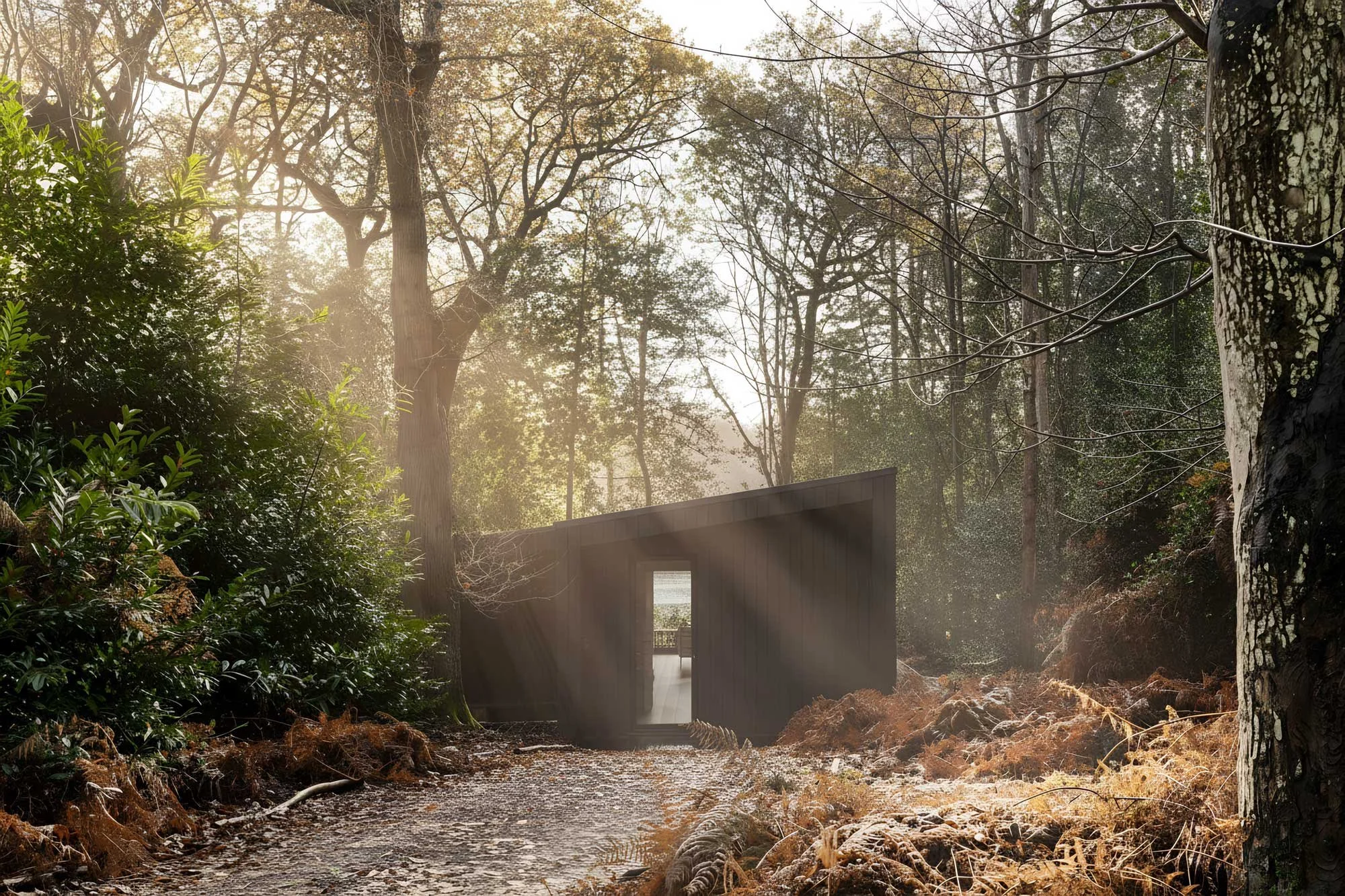
Fritton Lake, Norfolk. Twenty-five cabins and a floating sauna on a rewilding estate, each cabin placed for its own view of the water. The charred cladding is why they disappear into the woodland from across the lake.
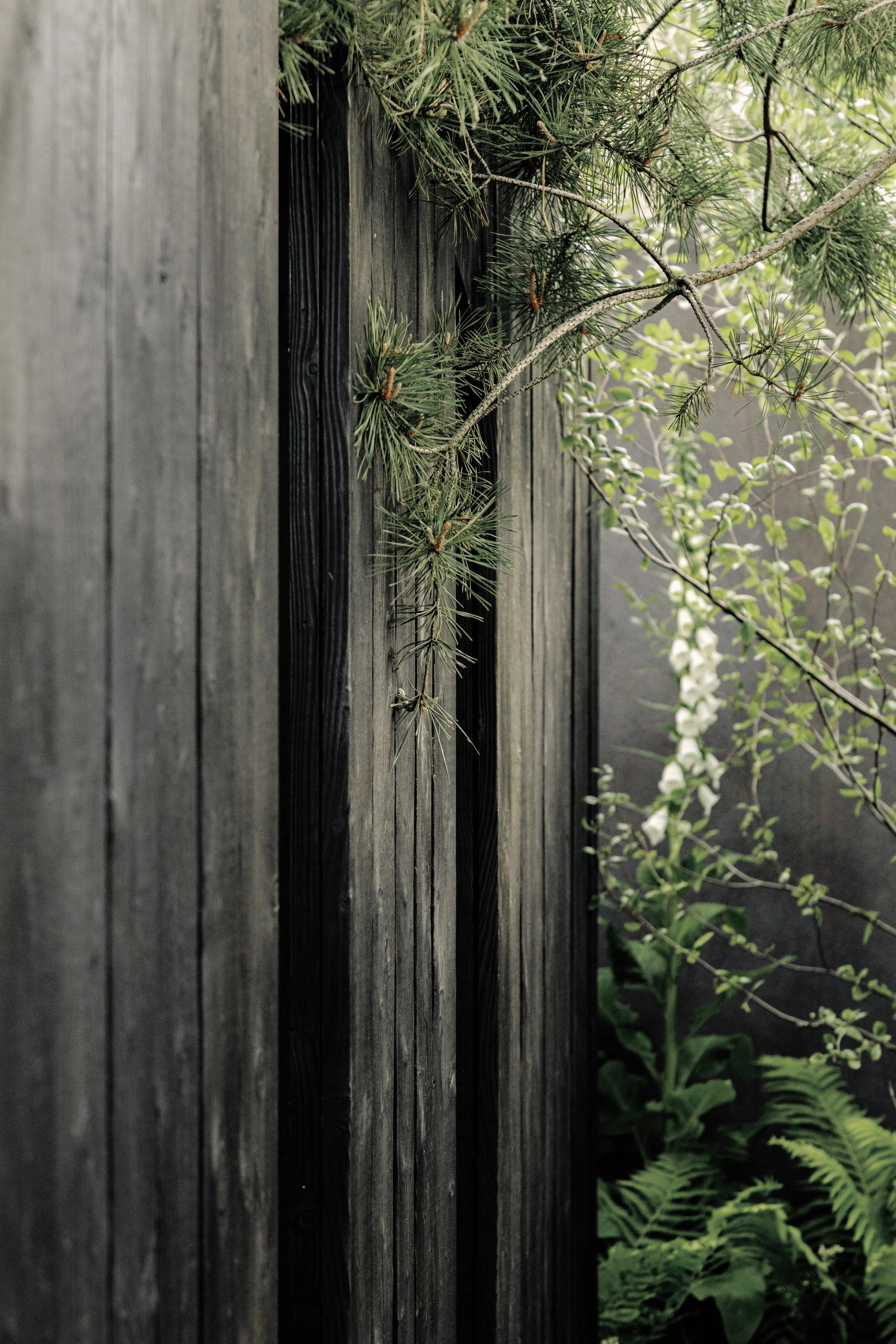
The Chelsea cabin. Our RHS Chelsea Flower Show pavilion, a flat-pack, carbon-neutral cabin in charred boards, with plaster and Scandinavian furniture inside.
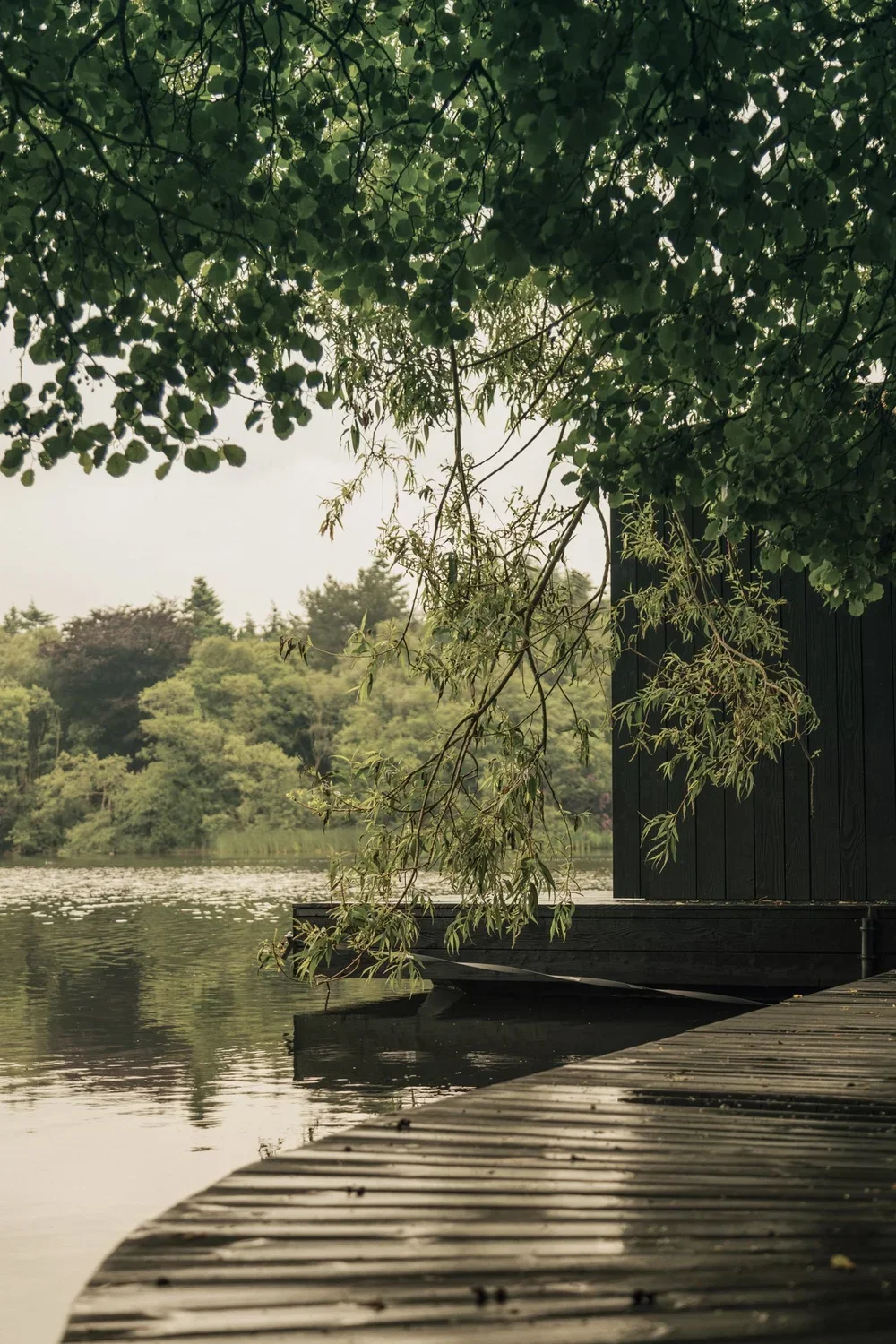
The floating sauna, Fritton Lake. A charred timber sauna for up to nine, anchored on the lake and reached by a floating walkway, from the same material palette as the cabins, so the sauna and the cabins on the estate read as one family.
What it is like to live with
In the first year the boards are matt black and the surface will mark a finger if you rub it. Over the following years the oil weathers off the faces that take the sun and rain, the black softens towards charcoal and the grain begins to show. North faces and sheltered faces stay darker for longer, so a building ends up slightly different on each side, which is how it should be. If a client wants the deep black kept, a re-oil every few years does it; if they are happy to let it weather, nothing needs doing. Loose char on the brushed finishes comes off in the first season and then stops.
It is not the right choice everywhere. Heavy char finishes can rub off on clothing where people brush past, so at doors and on terraces we use a brushed or oiled finish. And it is a dark material: on a tight urban site with no sky around it, it can read heavy. In open landscape it does the opposite.
Cost and supply
Charred larch costs more per square metre than painted softwood and about the same as a good hardwood or a composite that claims a similar life. On a Koto building the cladding is a few per cent of the cost, and it is the part of the building that then costs nothing to look after. We buy and char through the factories that build our modules, so the boards arrive on site already fixed and finished.
Questions we are asked
Is shou sugi ban waterproof? It sheds water very well, but it is a rain screen, not a seal. The building behind it is kept dry by the membrane and the detailing, as with any timber cladding.
Does it fade? It weathers rather than fades: from matt black to charcoal, with the grain showing, over five to ten years depending on exposure. Oiling slows that and renews the black.
Can it be used in a conservation area or a national park? Often it helps: a quiet black timber building is easier to make a planning case for than a pale one. Every site is different and we check early.
Is it sustainable? The timber is a renewable, carbon-storing material, and charring replaces paints and preservatives for the life of the cladding. Using British larch keeps the miles down.
Can I get it on a Koto cabin or home? It is our default. See the cabins and the homes, or start a conversation.